2026-09-08 · Ray Alcaraz
HOA Rules and Exterior Electrical Equipment: What You Can and Cannot Mount Where
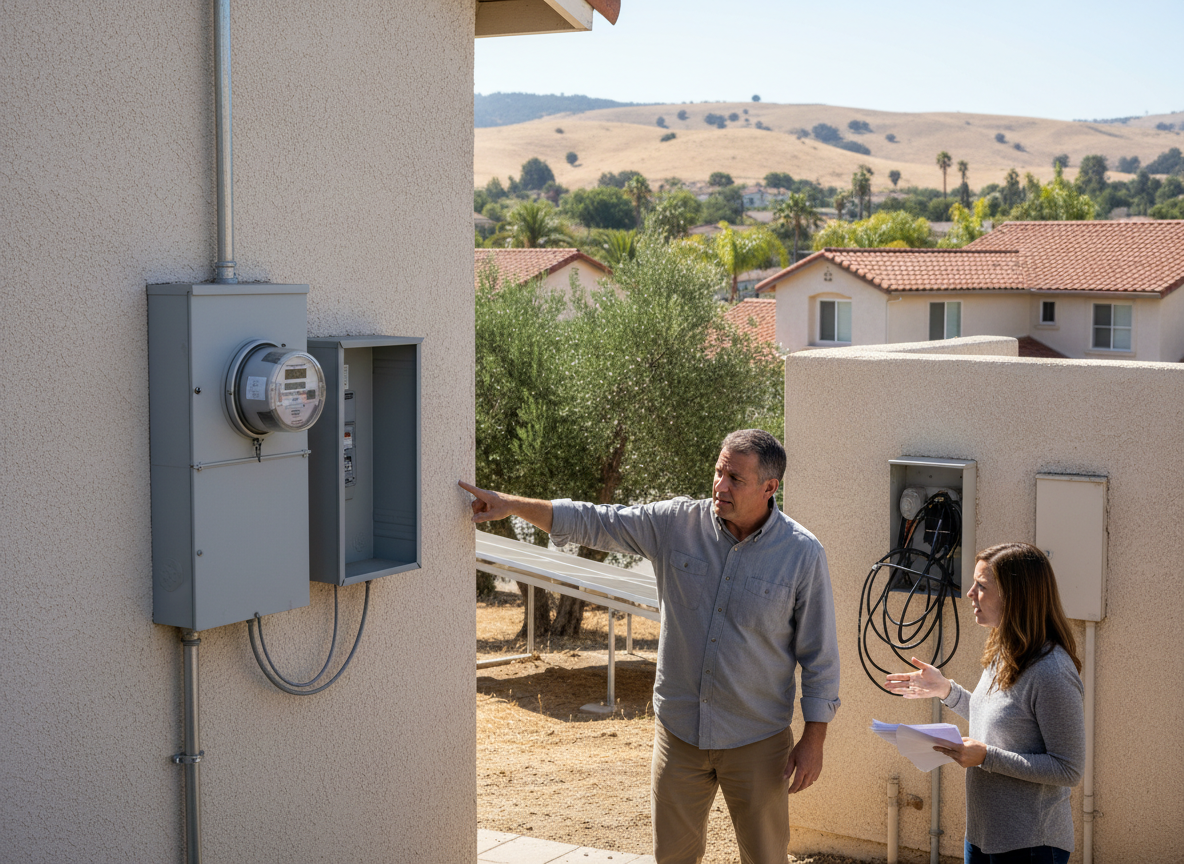
Most Temecula HOAs prohibit mounting main service panels or disconnects on front-facing walls or within 8 feet of side property lines without written approval, though side-yard or rear placements on stucco or block walls are often permitted if screened by landscaping.
Typical HOA Restrictions on Panels and Disconnects
In Riverside County subdivisions built after 2005, HOAs commonly require electrical panels to sit at least 5 feet from windows or doors and mandate neutral-tone enclosures that match the home's exterior. Older homes in Old Town Temecula face stricter scrutiny because many sit on smaller lots where rear-yard placement can violate fire setbacks. Dry summers increase heat buildup on exposed panels, so rules often require a minimum 12-inch clearance above grade and shade structures that do not extend beyond the equipment footprint. Homeowners in Harveston and Redhawk report that front-yard mounts are rejected outright while side-yard installs behind gates receive faster approval when conduit is painted to match the wall. Checking the specific CC&Rs before any exterior work prevents removal orders that can cost several hundred dollars to correct.
Mounting Lights, Outlets, and EV Chargers
Exterior lighting and receptacles must usually be placed on the rear or side elevations and limited to 8 feet above grade in most Temecula communities. Wolf Creek and Paloma del Sol covenants frequently cap the number of visible fixtures at four per elevation and require LED sources under 3000K to reduce glare. EV charger installations face additional rules: the unit itself must be mounted on the garage wall facing the driveway, never on the street-facing facade, and conduit runs must be concealed within walls rather than surface-mounted. Menifee and Murrieta border properties sometimes share HOAs that also limit charger height to 48 inches. These constraints arise because the warm Mediterranean climate keeps residents outdoors much of the year, making visible equipment more noticeable against the neighborhood aesthetic.
Approval Process and Inspection Steps
Submit a written request with scaled drawings showing exact locations, dimensions, and screening materials to the HOA architectural committee at least 30 days before work begins. Include photos of the proposed mounting surface and any existing equipment already on that wall. After approval, schedule a pre-cover inspection through the city of Temecula building department so the electrician can verify grounding and GFCI protection before stucco or siding is replaced. Properties in Vail Ranch and Crowne Hill often require an additional HOA walkthrough after completion. Linking this process to a full electrical inspection ensures every exterior mount meets both HOA and Riverside County electrical codes. Homeowners who skip the approval step risk fines that start at $250 and can escalate to forced removal.
Climate and Terrain Considerations in Temecula
The region's dry summers and intense afternoon sun accelerate UV damage to plastic enclosures and fade painted covers within three to five years, prompting many HOAs to require metal NEMA 3R boxes instead of plastic. Sloped lots common in Redhawk and Wolf Creek can create drainage issues if equipment is mounted too low, so rules often set a minimum 18 inches above finished grade. Soil movement from seasonal temperature swings also affects conduit stability, which is why surface-mounted runs on block walls are preferred over trenching in established neighborhoods. These local conditions directly shape what an electrician can propose without triggering HOA rejection.