2026-09-08 · Ray Alcaraz
Whole Home Surge Protection and Why Grid Switching Damages Electronics
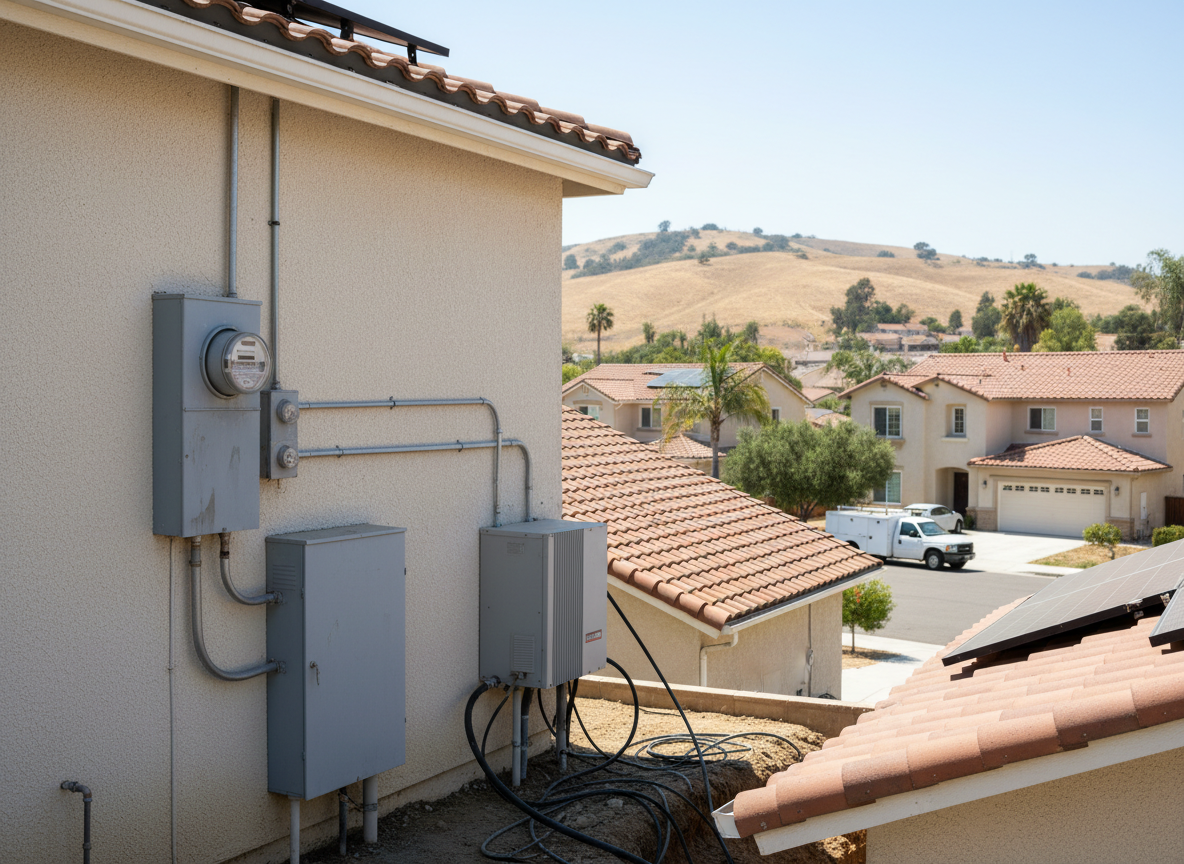
Whole home surge protection installs a device at the main panel that intercepts voltage spikes before they reach household wiring and appliances, addressing surges that originate from grid switching, utility restoration after an outage, or nearby lightning, none of which a typical power strip is built to handle at that scale.
Where Damaging Surges Actually Come From
A surge is a brief, excessive rise in voltage above the normal operating level. Homeowners often think of surges as originating inside the house, from a large appliance cycling on or off, and internal surges do happen. But some of the largest and most damaging surges originate outside the home entirely, at the utility grid level.
Grid switching happens when a utility like SCE reconfigures which lines are feeding which areas, whether for maintenance, fault isolation, or restoring power after an outage. When circuits are reconnected, particularly after an extended outage such as a PSPS event, the moment of reconnection can produce a voltage transient that travels down the line into every connected home. Lightning striking a line miles away, even without a direct hit to a specific house, can also induce a surge that travels through the utility system into multiple homes simultaneously.
A power strip surge protector is designed to absorb a relatively small, localized event. It has a limited energy-absorption capacity and is intended primarily for the kind of minor internal spikes generated by appliances in the same house. A grid-level surge event carries substantially more energy, more than a point-of-use strip is rated to dissipate, which is why relying on strips alone leaves a real gap.
How to Identify Whether Surge Damage Has Occurred or Is a Risk
Some signs point to surge-related damage after the fact, while others point to elevated risk going forward:
- Electronics or appliances failing shortly after a power outage, restoration, or a known lightning event nearby, especially multiple devices failing around the same time, which points to a shared surge event rather than coincidental individual failures.
- Repeated minor electronic failures over time without an obvious cause, which can indicate a pattern of smaller surges gradually degrading sensitive components.
- A home without any surge protection device installed at the panel, relying entirely on point-of-use strips for a house full of increasingly sensitive electronics, HVAC control boards, and smart home equipment.
- Frequent PSPS events or grid outages in your specific area, since each restoration event is a potential surge occurrence, making whole home protection more valuable the more often the grid switches around your circuit.
- A home with solar or battery equipment, since these systems add additional switching events, and their own electronics represent a meaningful investment worth protecting.
What to Do About It
A whole home surge protective device (SPD) installs at or near the main panel, intercepting surges at the point where they enter the home's electrical system, before they reach any branch circuit or plugged-in device. There are a few practical points to plan around:
- SPDs are typically rated in surge current capacity, and higher-rated devices provide more headroom for larger events, an important consideration for homes with solar, battery storage, or significant electronics investment.
- A whole home SPD does not replace point-of-use protection entirely. Sensitive electronics still benefit from a quality surge strip as a secondary layer, since the panel-level device and point-of-use devices work together rather than one substituting for the other.
- Installation is a contained project, generally involving a device mounted in or adjacent to the panel and connected to a dedicated breaker, which a licensed electrician can typically complete without a major panel overhaul.
- SPDs are sacrificial to some degree. After absorbing a significant surge event, the device may need inspection or replacement, and most have an indicator showing whether the device is still functioning correctly.
When This Becomes a Priority, Not Just a Nice-to-Have
Whole home surge protection is worth prioritizing rather than deferring in a few specific circumstances: households with solar or battery systems, where switching between grid and system power is frequent and the equipment itself is expensive; households in areas experiencing repeated PSPS events, given how often grid reconnection happens as a result; and any household with substantial investment in electronics, HVAC systems with sensitive control boards, or smart home equipment, where a single surge event could mean replacing multiple devices at once. It becomes an active safety and financial concern after any home has already experienced a suspected surge event without protection in place, since the same grid conditions that caused one event are likely to recur.
FAQ
Does a whole home surge protector eliminate the need for surge strips on my electronics? Not entirely. It handles large, panel-level surges effectively, but pairing it with point-of-use protection for particularly sensitive or expensive electronics provides an additional layer, since the two work at different points in the system.
Can a surge protector prevent damage from a direct lightning strike to my house? A direct strike carries far more energy than any surge protection device is designed to fully absorb, though a whole home SPD still reduces the severity of resulting damage compared to having no protection at all.
How do I know if my surge protector has already absorbed a major event and needs replacement? Most whole home SPDs have a visual indicator, often a light, showing whether the unit is still functioning. After any known major surge event, it is worth having the device checked, since some units are designed to fail safely after absorbing their rated capacity.
See our Electrical Inspection page.