2026-09-08 · Ray Alcaraz
Why Breakers Trip on 105 Degree Afternoons and What Is Actually Overloaded
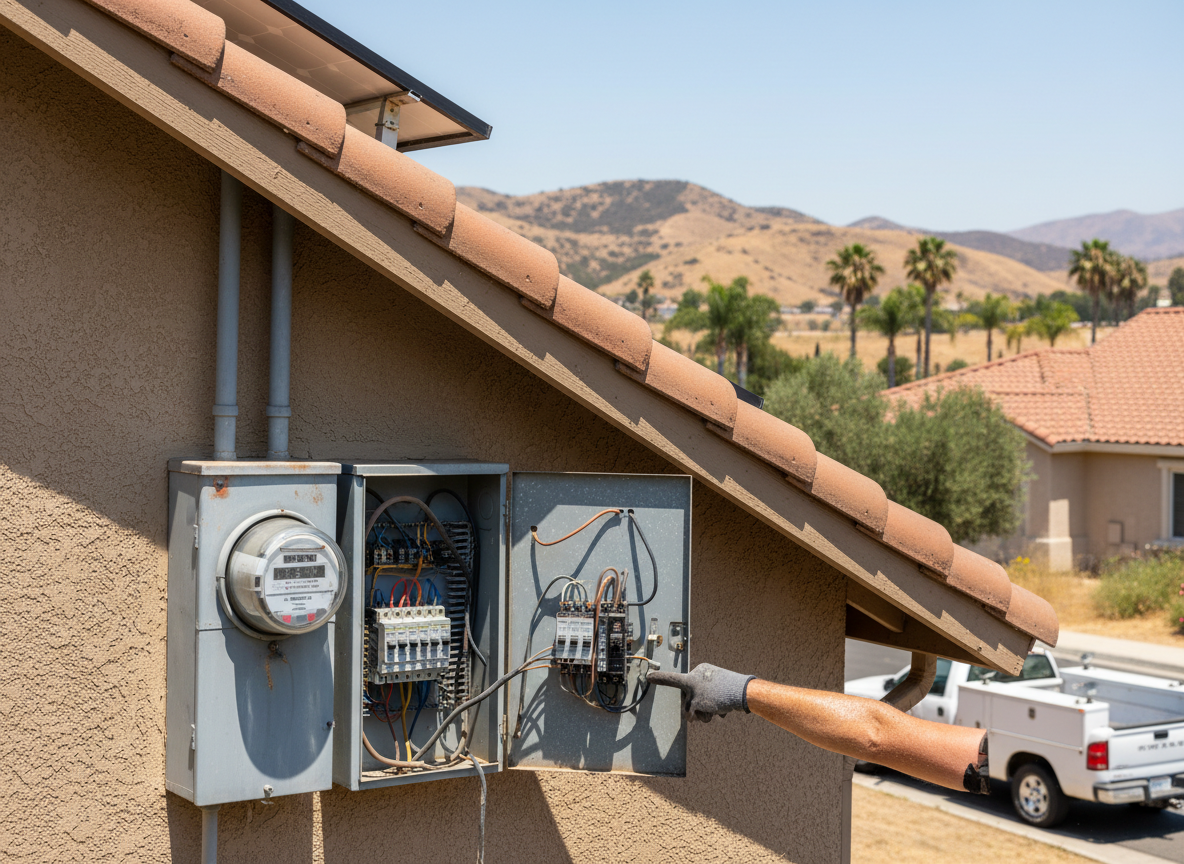
Breakers trip on 105°F afternoons in Temecula when the combined draw from central air conditioners, refrigerators, and pool pumps exceeds 80% of a circuit's rated amperage for sustained periods, especially in homes built before 2005 in neighborhoods such as Redhawk and Harveston.
How Summer Heat Drives Overload in Riverside County Homes
Temecula's dry summers push daytime highs to 105°F or more, forcing air conditioners to run continuously rather than cycling. In homes across Wolf Creek and Old Town Temecula, this sustained load often hits 30–40 amps on a 40-amp circuit when the compressor, blower, and condenser fan operate together. Older panels in these areas were sized for lighter loads typical of the 1990s, before widespread use of high-efficiency but still power-hungry variable-speed units. Soil conditions around Pechanga Resort and nearby Murrieta add heat retention, keeping outdoor condensers hotter longer and increasing runtime. The result is thermal stress on breakers that were never intended for eight-hour stretches at peak output.
Circuits That Fail First During Peak Heat
Homeowners in Menifee and Temecula notice trips most often on dedicated AC circuits, kitchen appliance circuits, and any line feeding a pool pump or spa. A typical 3-ton unit can pull 18–22 amps at startup and settle at 12–15 amps once running, but when attic temperatures climb, the compressor works harder and current rises another 10–15%. Adding a refrigerator on the same leg or an EV charger plugged into a nearby outlet pushes the total past the 80% continuous-load rule. In Harveston and Redhawk tract homes, many 100-amp or 125-amp main panels lack sufficient breaker spaces, so multiple high-draw items share circuits designed for far less.
What an Overloaded Panel Actually Looks Like
An overloaded panel shows warm breaker handles, a buzzing sound when the AC starts, or repeated trips on the same circuit even after resetting. In Wolf Creek and Vail Ranch homes, panels installed 15–20 years ago often have aluminum bus bars that expand and contract with heat, loosening connections over time. When afternoon temperatures peak, these connections create resistance that generates more heat and trips the breaker. Checking voltage drop at the panel during a 105°F day reveals whether the main lugs or breakers are the weak point before a full failure occurs.
Practical Steps Before Calling for Service
Turn off non-essential loads such as dryers or ovens during the hottest hours and monitor which breaker trips first. Note the exact time and outdoor temperature so a technician can correlate with AC runtime. For homes near Temecula Valley Wine Country where irrigation pumps also run, stagger their schedules to avoid simultaneous peaks. If trips continue after reducing load, the panel itself is likely undersized for current usage patterns in Riverside County.
When Panel Capacity Becomes the Real Issue
Many homes in Old Town Temecula and Crowne Hill still operate on original 100-amp or 125-amp service even after additions like tankless water heaters or home offices. When summer loads push total draw above 80 amps for hours, the main breaker or individual branch breakers trip to protect wiring. An electrical panel upgrade addresses the root cause by increasing capacity and adding modern AFCI/GFCI protection required by current code. Residents who also want backup power during outages can review standby generator options to reduce reliance on the grid during extreme heat.
Getting Help When Trips Become Frequent
Persistent trips on hot afternoons signal that the electrical system needs inspection rather than repeated resets. A licensed electrician serving Temecula can measure actual loads at the panel during peak conditions and identify whether the problem is a single circuit, shared neutrals, or the main service. Call 24 hours a day at 41593 Winchester Rd, Suite 200, Temecula, CA 92590 for same-day assessment when safety or comfort is at stake.