2026-09-08 · Ray Alcaraz
Wiring a Casita or ADU: Subpanels, Feeders and Detached Structure Rules
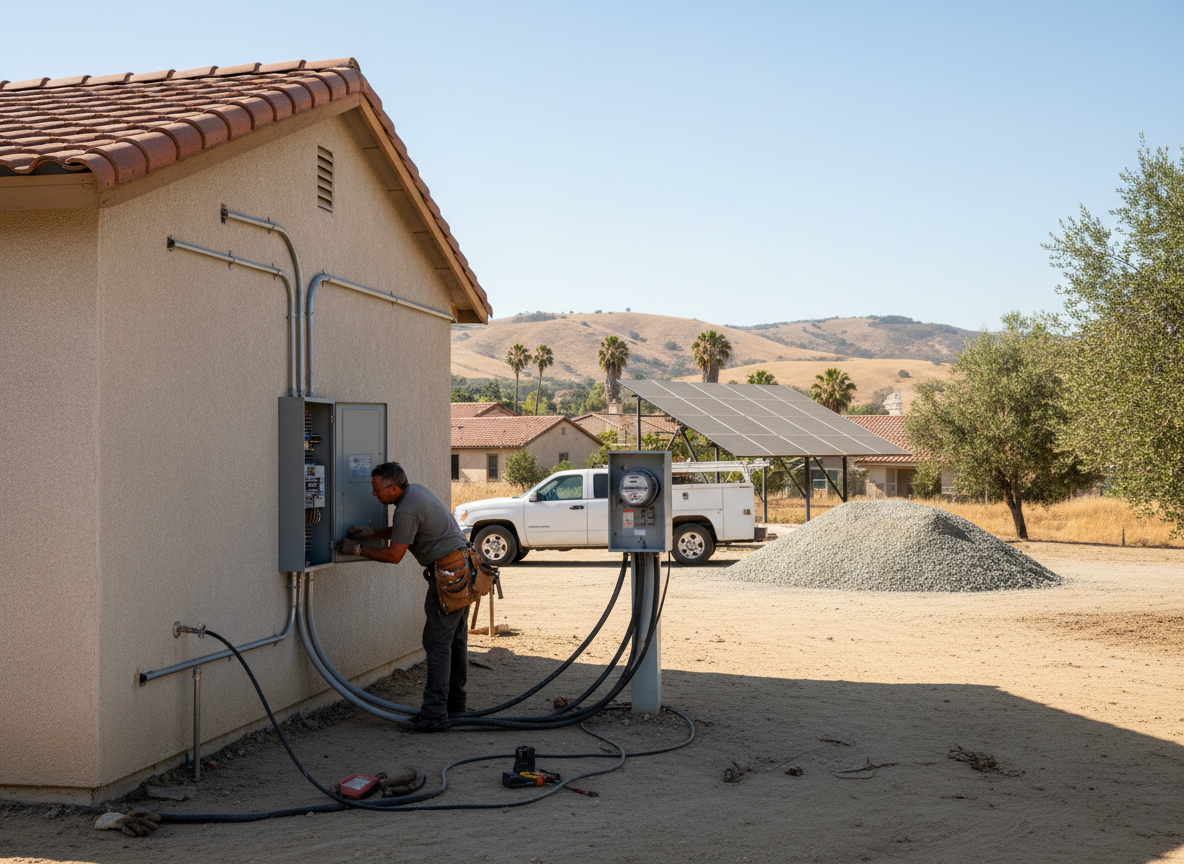
In Temecula, wiring a casita or ADU typically requires a dedicated 100-amp or 200-amp subpanel fed by 3- or 4-wire conductors sized for the calculated load, run in conduit from the main service at the primary residence while maintaining at least 10 feet of clearance above grade and following NEC Article 225 for outside branch circuits and feeders.
Detached Structure Rules in Riverside County
Riverside County adopts the California Electrical Code with local amendments that treat any structure more than 6 feet from the main dwelling as detached, triggering separate grounding, bonding and disconnect requirements. A casita in neighborhoods such as Redhawk or Harveston often sits on sloped lots where soil movement and seasonal heat expansion demand rigid or intermediate metal conduit rather than PVC alone. The feeder must originate from a main panel that has sufficient bus capacity; many homes built before 2005 in Old Town Temecula carry 100-amp services that cannot support an additional 100-amp subpanel without an upgrade. Proper identification of the feeder at both ends and a disconnect within sight of the ADU are mandatory. These steps prevent backfeeding issues during Public Safety Power Shutoff events that affect the region each fall.
Subpanel Selection and Placement
Select a subpanel rated for the calculated load plus 25 percent future capacity, commonly 100 amps for a one-bedroom casita or 200 amps when the unit includes a kitchen and laundry. Mount the enclosure on an exterior wall or inside a utility closet with 36 inches of working clearance and at least 6 inches above finished grade to account for occasional monsoon runoff in Wolf Creek and Murrieta-adjacent areas. Use copper conductors for the feeder when runs stay under 100 feet; aluminum is acceptable for longer pulls if terminations are rated for it. Bond the subpanel neutral to ground only at the main service and keep them isolated in the ADU panel. Label every circuit clearly so future owners or inspectors can trace power sources without guesswork.
Feeder Sizing and Conduit Considerations
Calculate feeder size using the ADU square footage, appliance loads and HVAC requirements, then apply voltage-drop corrections for runs exceeding 80 feet common on larger lots in Vail Ranch or Crowne Hill. A 100-amp feeder typically uses 3 AWG copper or 1 AWG aluminum in 1-1/4 inch conduit; a 200-amp feeder steps up to 3/0 copper or 250 kcmil aluminum. Bury conduit 18 inches under driveways and 12 inches under landscaped areas, or run it overhead on treated posts where trenching would disturb established wine-country vines near Pechanga Resort. Include a pull string and leave 12 inches of slack at each end. In the dry summers typical of Menifee and Temecula, UV-resistant conduit and weatherproof fittings prevent cracking that would otherwise appear within five years.
Local Climate and Terrain Impacts
The warm Mediterranean climate brings daytime highs above 100 degrees in summer, which increases conductor operating temperature and may require derating when feeders run through attic spaces or along south-facing walls. Winter rains can saturate clay soils in Meadowview and Paloma del Sol, raising the risk of conduit movement if expansion joints are omitted. Ground rods at the ADU must reach 8 feet and achieve 25 ohms or less; rocky terrain in Redhawk often requires multiple rods or chemical enhancement. These site-specific factors make a one-size-fits-all plan unreliable and underscore why each installation begins with a load calculation and site visit rather than a standard template.
Inspection and Ongoing Compliance
Riverside County requires a permit and final inspection for any new subpanel or feeder serving a detached structure. Schedule rough-in inspection after conduit and conductors are installed but before backfill or wall covering. Keep the 24-hour contact at 41593 Winchester Rd, Suite 200 available for the inspector. After approval, document the feeder size, breaker rating and grounding method in the homeowner’s records. Homeowners in Harveston and Old Town Temecula who later add EV chargers or pool equipment to the ADU panel will appreciate having planned extra capacity from the start.